
Rope Access, Boom Lift, or Water-Fed Pole
Every building has one right way up. Most contractors pick the method they already own equipment for, then make your building fit it. We look at the elevation, the ground around it, and the anchors on the roof, and we pick what the building calls for.
Often a single building needs two methods. A podium level and the parking-side wing come off a lift, the sheer bay-facing elevation comes off ropes, and the ground floor storefront glass gets a water-fed pole. That is normal, and it is quoted as one job.
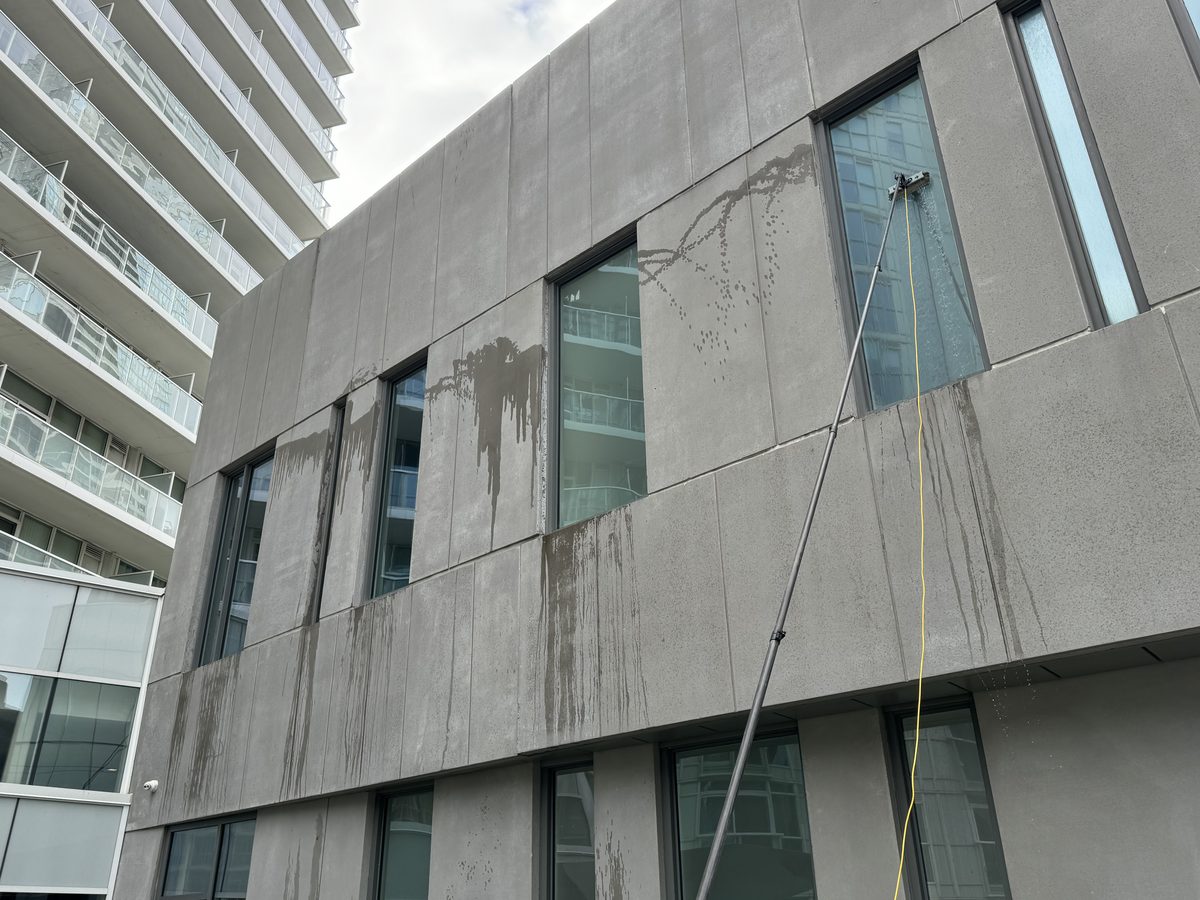
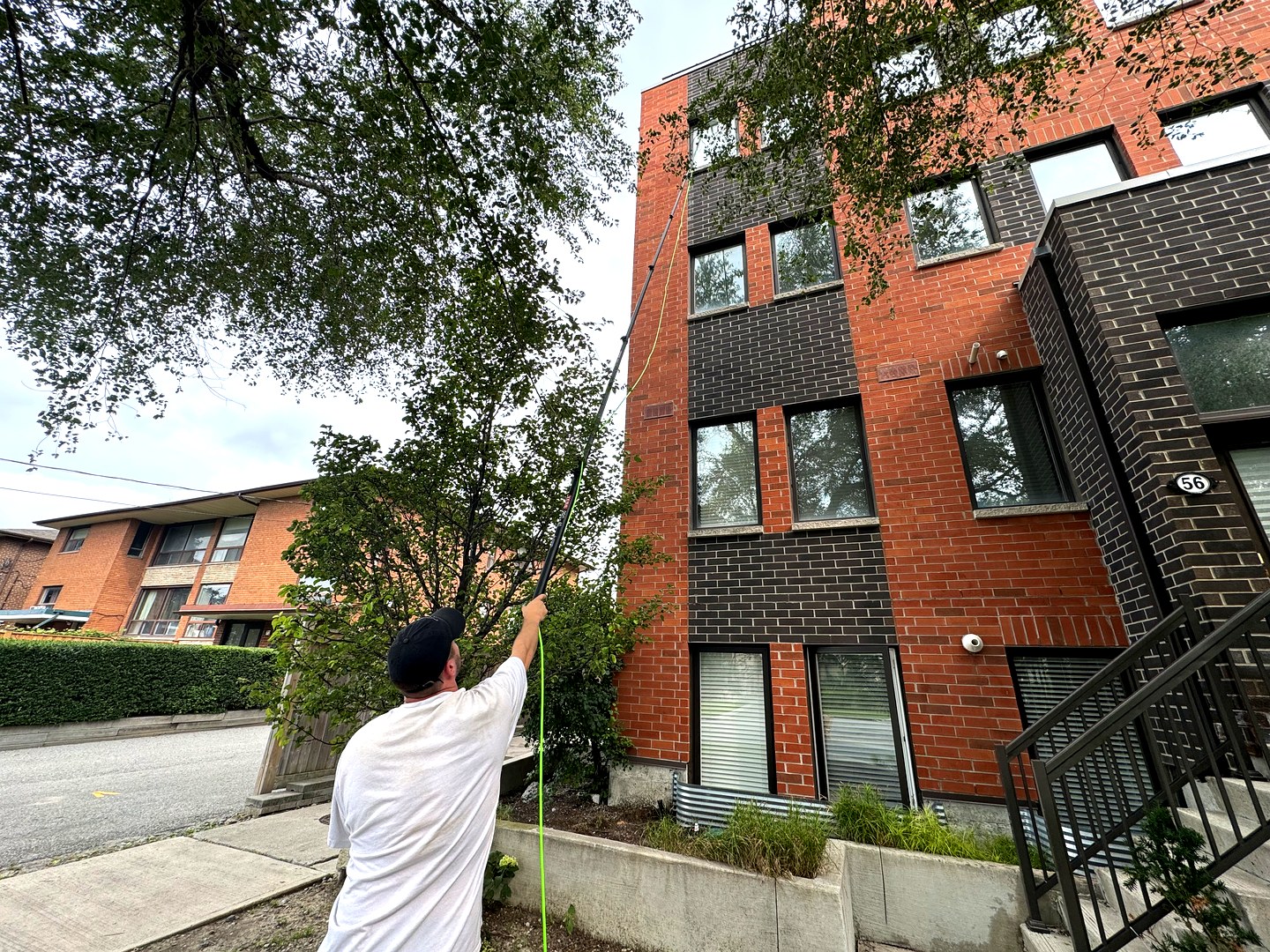
- Water-fed pole — purified water from ground level, no ladders against your cladding, nothing touching the glass but a brush and clean water. Reaches 50+ ft, which covers most four and five storey buildings.
- Aerial work platform — a boom or scissor lift where there is stable ground, clear access, and room to set up. Fast and efficient, but it needs somewhere to park and something solid to sit on.
- Certified rope-access partners — descent from roof anchor points. This is what handles sheer elevations, inside corners, courtyards, and anything a lift cannot reach or safely set up under.
- Combination — we spell out which elevation gets which method before you sign anything.
Safety Paperwork Comes Before the First Drop
Property managers and boards get asked one question after a job like this goes wrong, and it is always about documentation. The paperwork your contractor vetting file needs is issued before anything gets scheduled — the full list is below.
There is one piece we cannot supply for you. Roof anchor points need current engineering certification, and on older Collingwood and Blue Mountains buildings that file has often gone missing between property managers. Tell us early if you are not sure where yours is. It is the single most common reason a high-rise clean gets pushed.
- $2M commercial general liability
- WSIB coverage on every worker on site
- Certificate of insurance issued before scheduling
- Written service record after every visit for your maintenance file
Residents Barely Notice We Were There
A high-rise clean touches every unit in the building, which means it is as much a communications job as a cleaning job. We work elevation by elevation on a posted schedule so residents know which day their side of the building is being done and can close their blinds if they want to.
Balconies are where it usually goes sideways. Plants, furniture, drying laundry and anything loose need to come in for the day on the elevations being worked. We flag ground-level drop zones and any parking spots that need to be clear, and we work through them in the smallest blocks we can so the lot never fully closes.
- Elevation-by-elevation schedule your manager can post in advance
- Ground drop zones and parking closures identified before the crew arrives
- Balcony and window-covering instructions written for residents, not for contractors
- Early starts and Saturday scheduling available for occupied commercial floors
Wind Runs the Schedule
On Georgian Bay, wind is the reason high-rise work gets booked with a window rather than a date. Off-lake wind builds through the afternoon and hits exposed north and west elevations hardest, and neither rope work nor a boom platform is safe to run past its limits. Nobody negotiates with that.
So we build the schedule around it. We book a target day with a backup, we work the sheltered elevations first when the forecast is marginal, and we call the hold early rather than sending a crew up and pulling them down an hour later. If we stand down, you hear it that morning, not after the fact.
The season matters too. Spring is also when every building in the region is asking, so booking a slot in winter matters. Booking a spring slot in winter is the difference between the week you want and the week that is left.
Glass at Height Takes More Than Soap
High-rise glass never gets cleaned casually, so what lands on it stays for a year at a time. Escarpment pollen bakes on through spring. Freeze-thaw drives grit and road salt film up the lower floors all winter. Mineral runoff from concrete, sealant and ledges leaves vertical streaking that takes technique, not pressure, to remove.
Coated and tempered glass is unforgiving. The wrong scraper on a newer coated pane leaves damage no cleaning fixes, and on a curtain wall that is a glazing invoice, not a cleaning one. We identify what we are working with before we start, and we tell you if a pane needs a restoration approach instead of a wash.
One Contractor for the Whole Building
Most of the buildings we do this work for need more than glass. The same visit can cover the entrances and walkways, the gutters and roofline drainage, and the underground parking garage — sweeping, machine scrubbing, overhead pipes, walls and pillars.
That means one contractor vetted once, one schedule to coordinate, and one consolidated invoice per property instead of four vendors and four sets of paperwork. We have been doing exterior work across the fourteen communities around the bay since 2012, with a 5.0 Google rating across 34 reviews and 2,000+ customers behind it.
- Window cleaning, gutters, power washing and garage cleaning under one agreement
- Multiple properties in one portfolio on a single master schedule
- One consolidated invoice per property, per visit
- Streak-free guarantee on the glass — 48 hours to tell us and we come back
Recent work
“Excellent service! Would highly recommend!! My windows look great…thank you!!”
★★★★★Anne McRae · Google review